Learning format
Flashcard
A question, your answer — and only then the solution. The moment in between is where the learning happens.
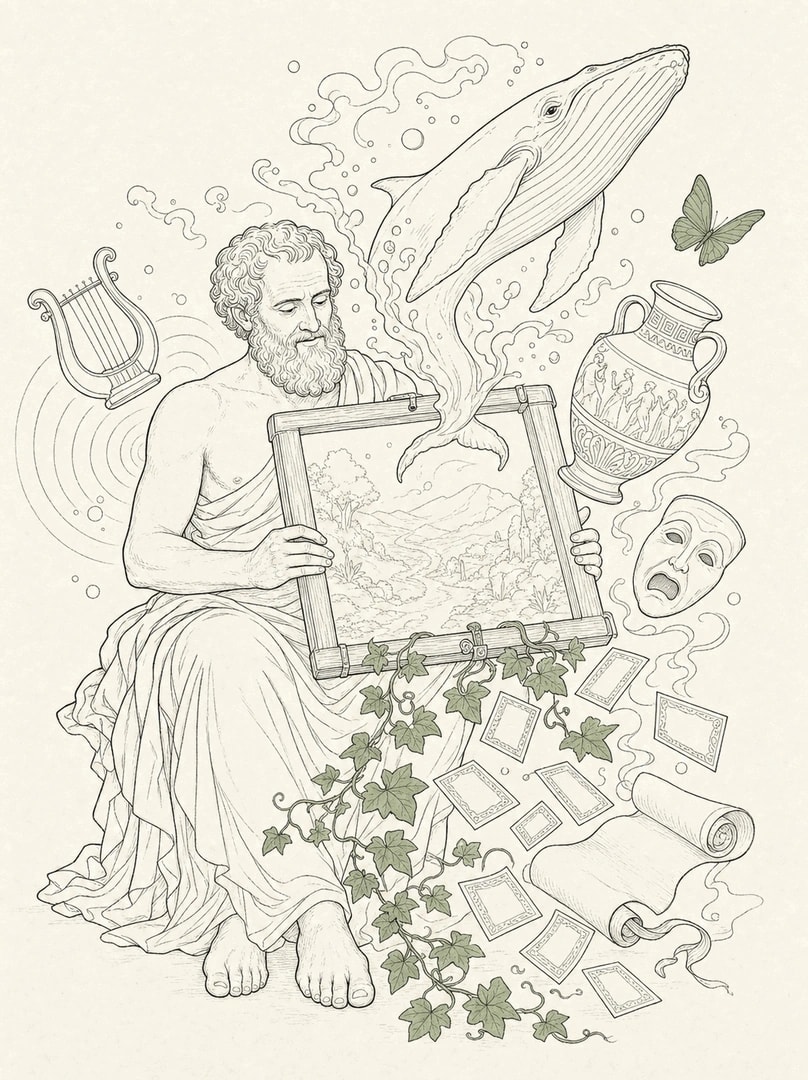
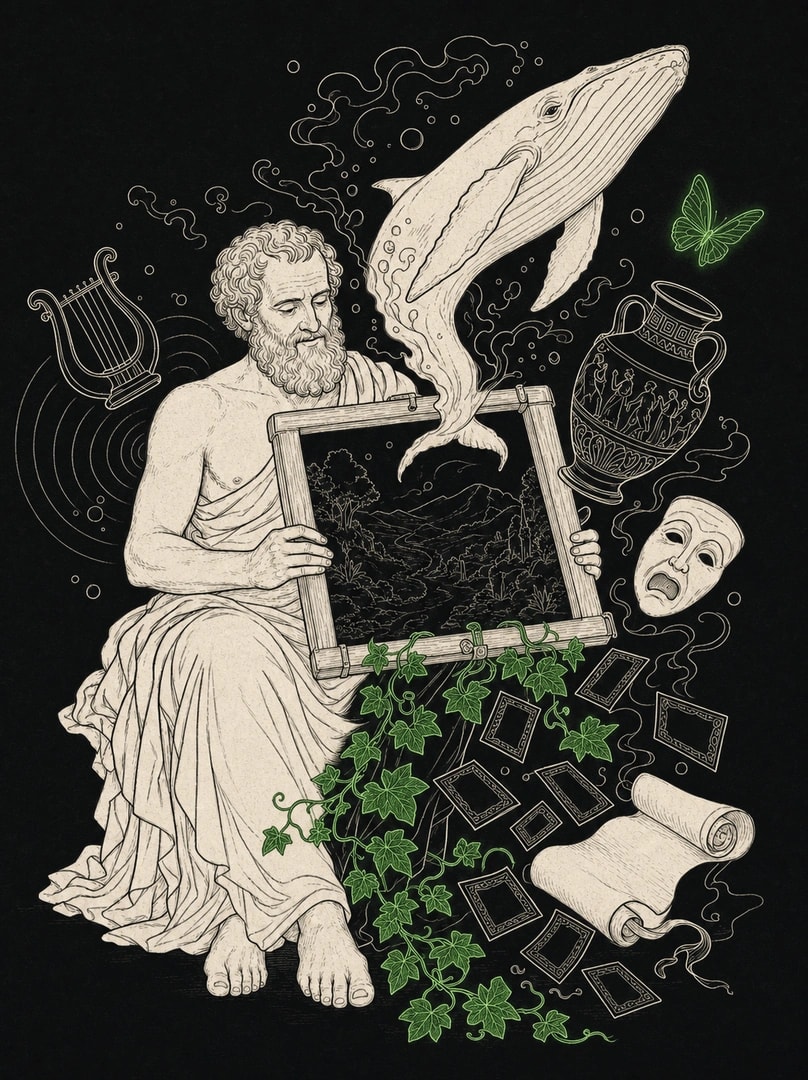
A flashcard looks like the simplest learning tool there is: a question on the front, the answer on the back. That plainness is exactly the point. It forces you to pull the answer out of your head before you see it — and that pulling out is the work that strengthens memory. Not the reading, not the recognising. The producing.
The difference is bigger than it sounds. Research calls it the testing effect: people who quiz themselves retain considerably more than people who re-read the same material — and they do so when it counts, days and weeks later. Re-reading feels the other way round. The text seems familiar, familiarity feels like competence, and that confidence is precisely what deceives you. Quizzing feels harder and works better.
The second thing a card can do is pick the right moment. Repeat everything the same evening and you learn the same thing three times. Spread it across days and every repetition works against forgetting — the later it comes without you having lost the answer already, the more it does. That is the moment Mnemorya calculates for each card, instead of leaving you to guess.
In Mnemorya a flashcard is therefore more than question and answer. You can pose it as a cloze, as multiple choice or as free text — and with free answers Mnemo checks the meaning, not the wording. You can answer out loud without looking. And you can have it come back to you when it is about to slip, rather than when you happen to have time.
The research behind it
The studies this method rests on. Each one is verifiable through its DOI — looking them up is very much the point.
The foundational finding. People who re-read a text could reproduce it better after five minutes — after a week it was the other way round: testing clearly beat re-reading. What is striking is that the re-readers felt more confident and still performed worse.
Test-Enhanced Learning: Taking Memory Tests Improves Long-Term Retention. Psychological Science, 17(3), 249–255.
doi.org/10.1111/j.1467-9280.2006.01693.xRetrieval beats not only re-reading but more elaborate methods too: students who quizzed themselves learned more than those who built concept maps of the same material — even when the final test was itself creating a concept map.
Retrieval Practice Produces More Learning than Elaborative Studying with Concept Mapping. Science, 331(6018), 772–775.
doi.org/10.1126/science.1199327A synthesis of 839 comparisons from 317 experiments: spaced learning beats massed learning. The optimal gap depends on how long you want to keep it — the more distant the test, the further apart the repetitions may lie.
Distributed practice in verbal recall tasks: A review and quantitative synthesis. Psychological Bulletin, 132(3), 354–380.
doi.org/10.1037/0033-2909.132.3.354Not a laboratory finding but a full school year of real teaching: regular quizzing in the classroom improved performance months later — and did so in the final exams, not merely on the practised quiz questions.
Test-enhanced learning in the classroom: Long-term improvements from quizzing. Journal of Experimental Psychology: Applied, 17(4), 382–395.
doi.org/10.1037/a0026252
Keep watching
See the idea in motion.
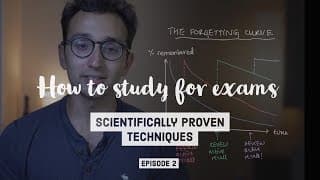
Selected videos for going deeper. Each link opens the original creator on YouTube.