Learning format
Impulse
Short prompts that surface in between and keep working in your head — right when you had almost forgotten them.
An impulse is not a test. It is a sentence, a question, a thought that surfaces while you are doing something else — and lets you touch the topic again for a few seconds. That brevity is the point: it costs nothing and interrupts nothing, but it moves the moment at which you would lose sight of the topic for good.
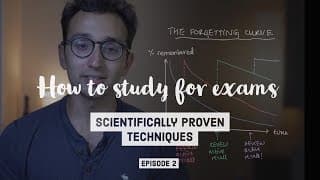
Behind it lies the best-documented finding in learning research: spaced beats massed. Repeating ten times in one evening does less than ten times spread over weeks — considerably less. The best gap depends on how long you want to keep it; the more distant the goal, the wider the gaps may be.
The catch is that the right thing feels wrong. An impulse arriving when you have nearly lost the answer is harder work than one shortly after learning — and that is exactly why it works better. Learning research calls such hurdles desirable difficulties: what is more effortful in the moment lasts longer.
In Mnemorya you decide how often impulses may surface and on which topics. Mnemorya works out the moment — shortly before the topic is about to slip, not on a fixed timetable.
The research behind it
The studies this method rests on. Each one is verifiable through its DOI — looking them up is very much the point.
A synthesis of 839 comparisons from 317 experiments: spaced learning beats massed learning, and the most favourable gap grows with the period over which you want to retain something.
Distributed practice in verbal recall tasks: A review and quantitative synthesis. Psychological Bulletin, 132(3), 354–380.
doi.org/10.1037/0033-2909.132.3.354Why an impulse asks rather than reminds: testing yourself beats re-reading when it counts — even though re-reading feels safer in the moment.
Test-Enhanced Learning: Taking Memory Tests Improves Long-Term Retention. Psychological Science, 17(3), 249–255.
doi.org/10.1111/j.1467-9280.2006.01693.x
Keep watching
See the idea in motion.
Selected videos for going deeper. Each link opens the original creator on YouTube.