Concept
Multimedia principle
The multimedia principle says: with words and a matching picture you learn more than with words alone.
- 1
One short text
A slide carries exactly one text. One sentence is enough – the picture tells the rest.
One short text
A slide carries exactly one text. One sentence is enough – the picture tells the rest.
- 2
A picture that fits
An image or a video fills the background, never both. It shows what the sentence means instead of writing it out again.
A picture that fits
An image or a video fills the background, never both. It shows what the sentence means instead of writing it out again.
- 3
Add sound, then look
A sound from “Our Sounds”, your own recording or Spotify. The preview shows the slide exactly as it appears in the feed.
Add sound, then look
A sound from “Our Sounds”, your own recording or Spotify. The preview shows the slide exactly as it appears in the feed.
Multimedia simply means several kinds at once, for example text, pictures and sound. Think of building instructions. Text only is a pain, with a picture you see right away where each part goes. But careful: if the picture only repeats what is already written, it doesn't help. Saying the same thing twice tends to make it harder.
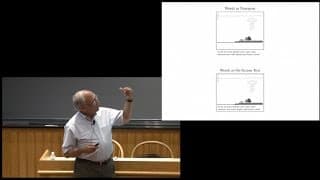
The researcher Richard E. Mayer from California tested this in experiments over many years. For example, he showed learners how a bicycle pump or a thunderstorm works, sometimes with words only, sometimes with a picture added. In 2001 he summed up his results in the book “Multimedia Learning”. One surprising finding: when the same text also appears on the screen alongside a spoken explanation, people learn less.
Your head takes in words and pictures along two paths. When both come together, it builds one solid whole out of them. But when the same text is there twice, you have to read and listen at the same time, and that tends to be too much.
In Mnemorya you can combine text with an image or a video on every slide and add sound. It is an option, not a must.
The research behind it
The studies this method rests on. Each one is verifiable through its DOI — looking them up is very much the point.
Mayer sums up many of his own experiments and shows: people who get words and matching pictures together understand more than with words alone.
Multimedia Learning. Cambridge University Press.
People who see a process as a moving picture and hear the explanation at the same time can afterwards solve new problems about it better than with only one of the two.
Animations need narrations: An experimental test of a dual-coding hypothesis.. Journal of Educational Psychology, 83(4), 484–490.
doi.org/10.1037/0022-0663.83.4.484When the same text also appears on screen with a spoken explainer video, learners understand less, not more.
Cognitive constraints on multimedia learning: When presenting more material results in less understanding.. Journal of Educational Psychology, 93(1), 187–198.
doi.org/10.1037/0022-0663.93.1.187
Keep watching
See the idea in motion.
Selected videos for going deeper. Each link opens the original creator on YouTube.